
Well, my “reviews in review” are different this year as I stopped posting my monthly book, film, and documentary reviews. However, I still wanted to do a year-end roundup highlighting the “best of the best” and the “worst of the worst.” It helps me keep track of where I’ve come from and where I’m hoping to go in the new year. Bien. Here we go.
In 2025, I read 165 books, watched 99 movies, and watched and additional 52 documentaries. That’s a lot, even for me (I should really develop more of a social life…)! Next year, for the first time in a very long time, I think I may spend less time reading books that are new to me and, instead, go back and do a more sustained engagement with texts or authors that have left a strong impression upon me. I’m thinking about re-reading all of W. G. Sebald, for example, and seeing if some kind of reflection arises from that. Or, to pick another example, going back through the affect theory material I’ve read (along with some of the psychology stuff I’ve read from the likes of Bollas, Phillips, and Leader) to see what happens if I try to weave all that together in a way that excites me. That sort of thing. We shall see. Onwards, then, to the “best of the best” and the “worst of the worst.”
The Books
A few general observations. I read a significant amount of fiction this year and I’m quite happy with that. I also made a point of making sure that 90% of the fiction I read was by female-identified authors and I’m glad I met that goal. I’ve been making a point to try and read more women authors for a few years now—in part to try and counter the prominence of “the great men of literature” that dominate the public discourse and, in part, because I find most of my favourite authors, the ones who resonate most with me personally, are women (Drndić, Heti, Lockwood, Solà, all come immediately to mind).
In fiction, I also continue to try and read authors from around the world, although I think I read a fair bit more English-based authors this year than I have in previous years. That’s okay. Next year, I intend to try and be more deliberate in looking up authors from countries I have not yet experienced through literature. Asia and Africa are, of course, the least represented continents in my reading list. I’m torn between exploring that (massive!) options and going back to read more books by authors I know I will always enjoy. We’ll see what happens.
My engagement with various forms of writing continues to ebb and flow. I still find myself very interested to read texts written by psychoanalysts, affect theorists, and authors writing in the “science and nature” category. Reading in these areas fills me with curiosity and wonder—critical resources for living the kind of life I desire to live—and make me ask questions I have never considered before and see things in ways I have never seen before. Additionally, the category I have termed “subaltern spiritualities” is one that I have very much enjoyed exploring and I intend to read a lot more in that category next year. It inspires good thinking, creativity, curiosity, playfulness, and what-the-fuckness in me. It has also been a personal avenue back to engaging with the “spiritual” side of life which has been life-giving for me (as it is, in a multitude of ways, for so many subaltern groups pursuing things like liberation, decolonization, and emancipation). In 2025, I intend to focus more on Quimbanda, Vodou, and Igbe, along with Nordic conceptions of fate and Ørlǫg.
Some categories hold less and less interest to me. In particular, reading in the areas of economics and also in several critical theory categories—particularly as they pertain to my own area of work within, against outside of the non-profit industrial complex—has waned significantly. Over the last several years, I did a sustained study of neoliberalism. For most of my adult life, I have also been reading texts that pertain to how oppression operates in relation to the mass production of things like poverty, immiseration, and homelessness. I think I have a thorough understanding of these matters now and further reading—apart from a few texts here and there—mostly just depresses me and leaves me feeling increasingly hopeless (all these texts remind me of a quote Mark Fisher attributes to both Fredric Jameson and Slavoj Žižek: “it’s easier to imagine the end of the world than the end of capitalism”). In fact, I have a massive amount of notes pertaining to these things for a text I intended to write about neoliberalism, homelessness, and the various models of resistance that arise within communities of frontline workers and others (based in part upon my own sustained engagement in various communities of solidarity, resistance and liberation, over the years), but I find the whole matter too disheartening to dwell on in any sort of sustained manner. That book may never come to be and I’m okay with that. I’m getting old. I have fought a long fight for most of my life. Now, I wish to focus less on our enemies and more on what I love and, in fact, what gives me pleasure.
The Best of the Best
As always, it is difficult to pick the “best of the best” books read in 2025 and the following is entirely subjective, based upon my own personal aesthetics, and what I happen to be experiencing at the time of reading. With that in mind, the book that stood out to me as my favourite book of 2025 is No One Is Talking About This by Patricia Lockwood.
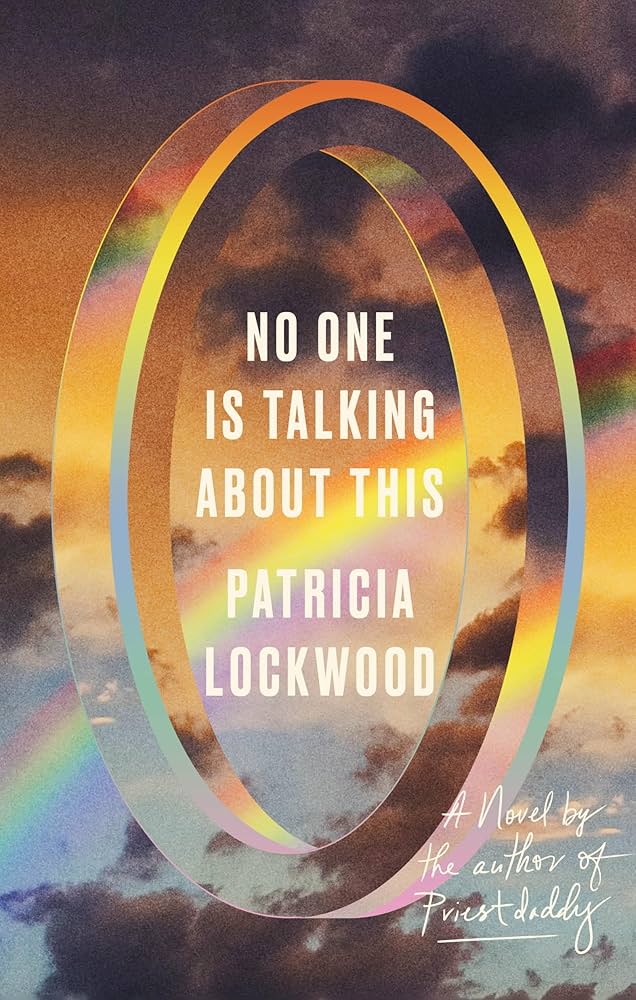
One of the major themes of 2025 for me was the pursuit of the sacred within the most trashy, uncultured, artificial, and superficial places. It’s easy to find G*d in a remote monastery in the Himalayas, or in the redwood forests of California, or during a candlelight service at midnight on Christmas eve… but where is G*d on social media? Where is the divine on Pornhub? Where is beauty in the dumpster overflowing in an alley that smells like piss and shit? Where is love on Love Island? And, also, where is G*d in Gaza? Sudan? America’s prisons? Where is the sacred in the context of colonization and ecocide? Where is the Spirit of Life in the midst of the sixth great extinction of all life on earth? Where is the Wonder that weaves, not around everything but through everything? These are the (perhaps heretical, perhaps déclassé) questions I have been asking myself as I live through my own tiny devastations—personal losses, experiencing the premature and preventable deaths of so many loved ones abandoned to die here in London, and so on—while also bearing witness to so many other massive devastations. It was in this context that I read Lockwood’s book. And Lockwood wrestles, in her own way, with these themes. It is a marvelous wrestling.
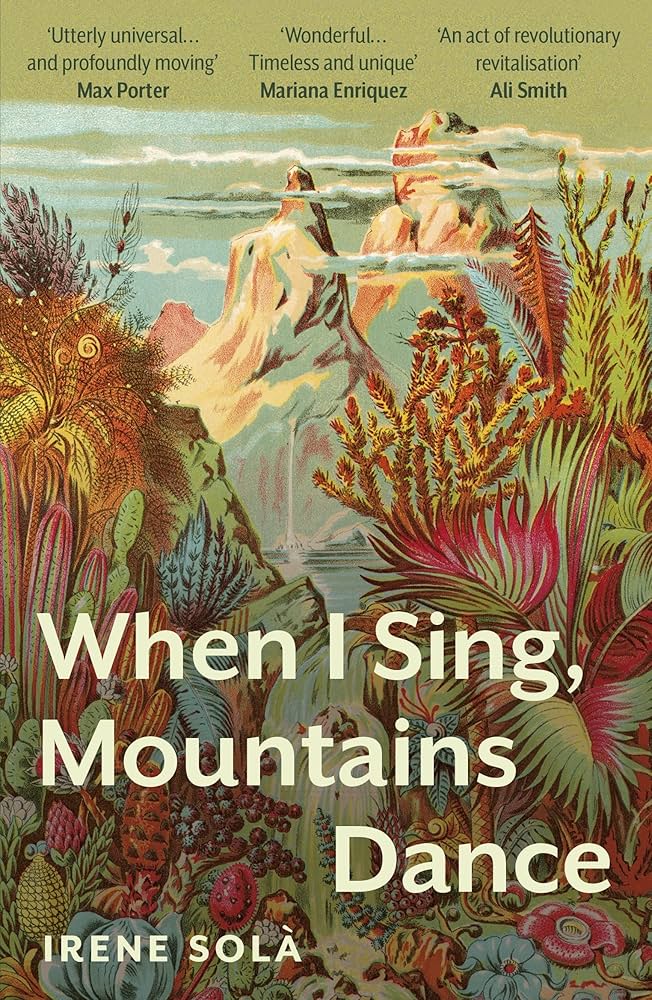
Two other works of literary non/fiction also stand-out and deserve special mention. These are When I Sing, Mountains Dance by Irene Solà and Pilgrim at Tinker Creek by Annie Dillard. I’m late to the Dillard, but it spoke to my heart and my soul. As for Solà, I found her Catalan variant of magical realism, along with the voices she deploys in her text to be absolutely bewitching. Both are highly recommended and, although short, I found I enjoyed them best in small portions (reading them is like consuming a very rich dessert—delicious but too much when I over-indulge).

I continue to flounder around in the domain of poetry. I enjoyed everything I read by Mary Oliver but the work that stood out most to me was Country Music by Zane Koss. Like Lockwood, Koss weaves together the sacred and the mundane, the meaningful and the insignificant, so that they cannot be separated from one another. They are one and the same. And he does all this weaving with considerable sensitivity and humour. He writes, in other words, in ways that most writers long to write but find impossible.
Four non-fiction books stood out to me more than others this year. First, within the realm of psychoanalysis, I was struck by what David Brazier said in Love and Its Disappointments.
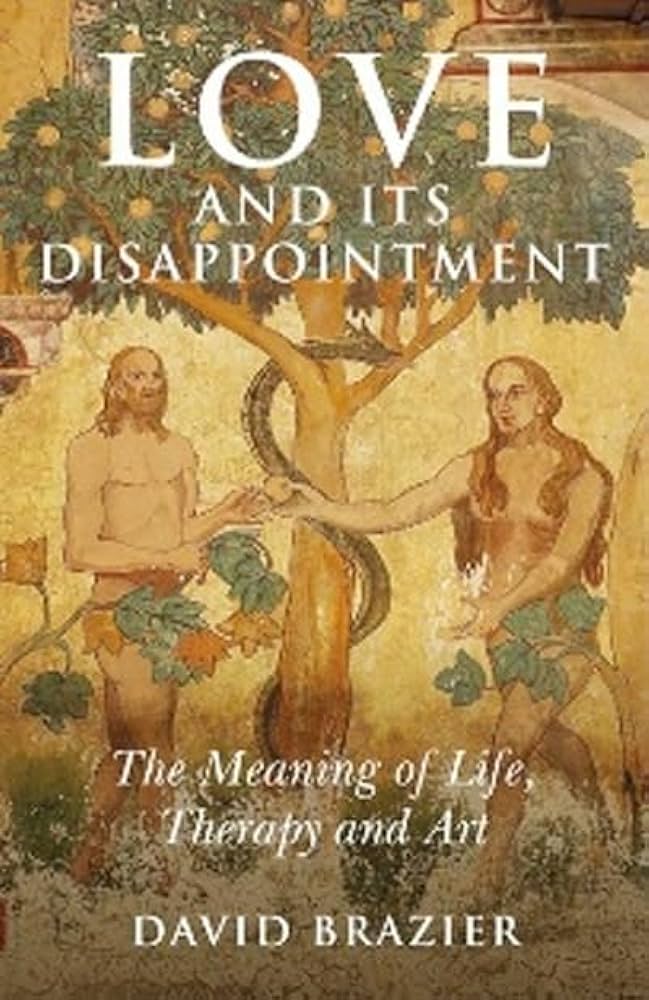
Brazier argues that people are born with two drives that are more fundamental than others. These are the desire to love others and the desire to be kept safe from harm (“connection” and “protection” as the polyvagal trauma people would say; although Brazier’s emphasis that the desire to love others is more fundamental than the desire to experience love ourselves is an interesting one and one that I have often reflected on in my own work and writings—especially given the ways in which so many charities, social services and non-profits deny their “clients” the right or ability to give love back to those who care for them). Brazier argues that, of these two drives, the desire to love others is more deeply-rooted. However, given the fuckery of life, we inevitably experience betrayals, hurts, and disappointments in the domain of love. How we then respond to those experiences—”love’s disappointments”—becomes that which establishes the kind of characters we become. In particular, Brazier argues that many of our personal idiosyncrasies, neuroses, and character traits arise from our commitment to still love others—somehow, someway—even after our love has been disappointed. I found this to be a fascinating perspective on many things that are pathologised and treated as “mental illness” or “badness” or “flaws.” It resonates with much of what I have seen in myself and in those who are most abandoned in our society—over and over, people come to others, not merely wanting to know that they are loved, but wanting to know that the love they have to give to others is desirable and good.
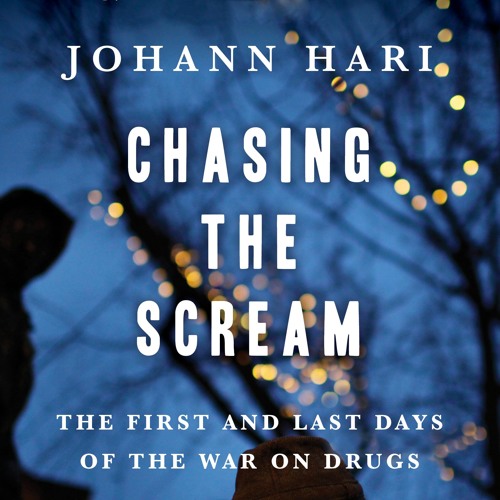
The second non-fiction book I want to highlight is Johann Hari’s Chasing the Scream. I felt a lot of things, not all of them comfortable or easy to feel, while reading this book. On the one hand, Hari does an outstanding job of presenting a thoroughly-researched but highly-readable case for why harm reduction works in all the ways that carceral, punitive, and abstinence-based approaches to criminalized substance use do not. It’s a slam dunk case and everyone who thinks they have anything at all to say about drug use should read this book. Furthermore, Hari tells the stories of several very inspiring people (some of whom I have had the honour of knowing personally, and who I still miss to this day) who came from the grassroots and helped create life-giving and life-affirming changes at a global scale. Truly wonderful work by truly wonderful people. It’s all so compelling and obvious and three-dimensionally good… aaaaand depressing and devastating and infuriating because all of these gains are being rolled back, carceralism, cruelty, and smug self-righteous Schadenfreude are all on the rise. Harm reduction is being abandoned, “forced treatment” is the new (i.e. old) model, and I’m seeing the absolutely needless suffering and death this is causing in communities of my loved ones. I love what Hari wrote. All of it. And I also cried deep, wrenching tears while reading because the reality he describes feels more and more like a fantasy now.
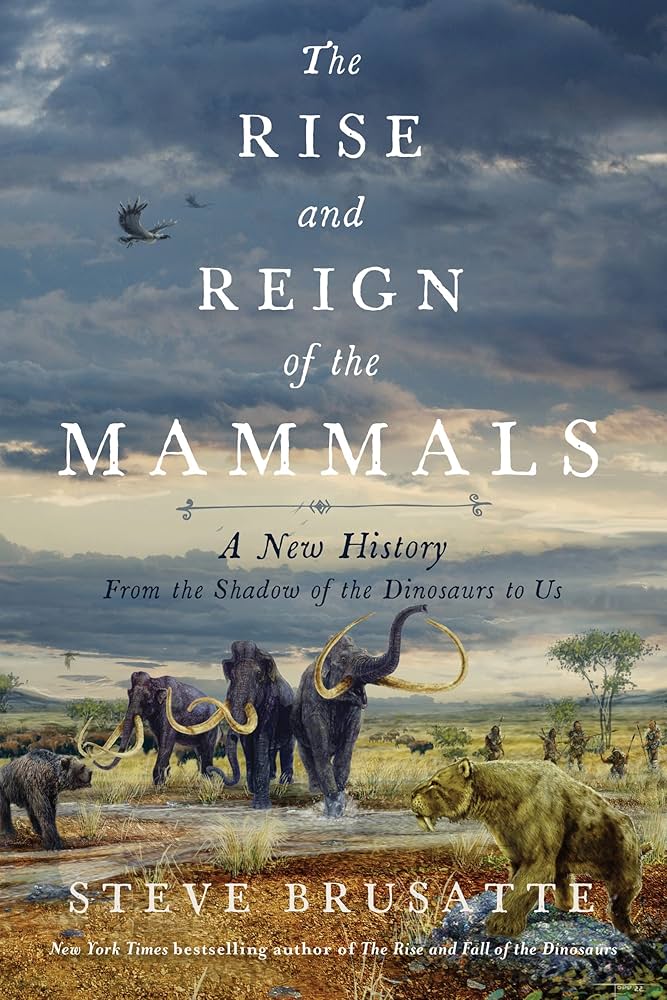
The third non-fiction book I want to highlight, which was a joy to read through-and-through, is The Rise and Reign of Mammals by Steve Brusatte. I’ve enjoyed almost everything I’ve read in the domain of evolutionary science (apart from some of the zealotry of neo-Darwinians who all-too-easily drift into being social Darwinists and whose science, at the end of the day, isn’t nearly as good as those engaging in ecological developmental evolutionary models). But the origins of mammals is something I knew almost nothing about (apart from the observation that a viral insert into our pre-mammalian DNA is what permitted mammals to evolve placentas in the first place, which is one of the really rad things about us being hybrid beings—even at the level of our DNA!). So reading this was just a rollicking good time full of me saying things like, “holy shit!” and “wow!” and “huh, I knew nothing about that and now I know a little bit about that—neato!” and “I wonder what happens next?”
So, that’s a ton of fun but, in some ways, given that we are living through the mass murder of life on earth, this is also a timely book. One of the things I love about evolutionary science books is that they show how life finds a way. (Like when I discovered that hundreds of species of radiotrophic fungi were living within the melted down reactor core of Chernobyl, happily munching on the radiation that killed everything else there and thinking, “my goodness, what a marvelous bounty exists for us!” In 500 million years, a short nap in the timescale of earth, what kind of life forms would evolve from these fungi??).
Perhaps it is an odd way to find hope, but I found what Brusatte had to say about the evolution of mammalian teeth to be very hopeful, indeed. Teeth are weird and complex and highly variable things—especially across species over the span of evolutionary history. Take tribosphenic teeth. These are teeth that combine grinding with shearing. In the words of Brusatte, they are a “marvelous evolutionary invention.” The first “unequivocal tribosphenic teeth” (also according to Brusatte) have been found in the fossil of a Therian mammal, Juramaia, who lived 160 million years ago. Initially, Brusatte goes on to tell us, for small insect-eating critters, trobosphenic teeth were “a useful gadget… but not yet a game-changer.” So, okay, but what if we skip forward ~45-80 million years? The Cretaceous Terrestrial Revolution occurs. Angiosperms (flowering plants) explode in numbers, size, diversity, etc., and completely (as the name tells us) revolutionize life on earth. So many plants means so many bugs means so many mammals with tribosphenic teeth that are perfect for gobbling up those bugs. Nom, nom, nom (mammals without tribosphenic teeth are SOL and they end up going extinct—RIP unevolved toothy dudes!).
Okay, that’s cool (unless you have unevolved teeth), but, also, there are dinosaurs. Mammals are small and they take over small places, but the dinos are big and continue to absolutely dominate the big places. From our original Juramaia (160 million years ago), we get to 66 million years ago and the giant asteroid that smashes into the Chicxulub Crater (which only got that name after the asteroid came, before, it was very much not a crater). Boom, smash, pow, aaaargh, out go the dinosaurs (except a few that become birds). Not only that but, damn, out go 75% of the species that existed at that time. Only 7% of mammals made it through. However, the mammals that did make it, and that went on replace the dinosaurs as the “Lords of the earth” (or whatever), were able to do so, in part, because of tribosphenic teeth and how their teeth (and other parts) continued to evolve from there.
And, okay, I guess I’m writing all of this down because it shows that, when it comes to hope, we really have no idea how near or far we are from doom. Mammals might have thought that they were absolutely done for when the earth was freezing and then burning, when molten glass was raining from the sky, when volcanoes were popping like bottles at the gentleman’s club, and when absolutely everything and everyone around them was dying. But the truth of the matter was that the seeds of their salvation had already been sown 100 million years before.
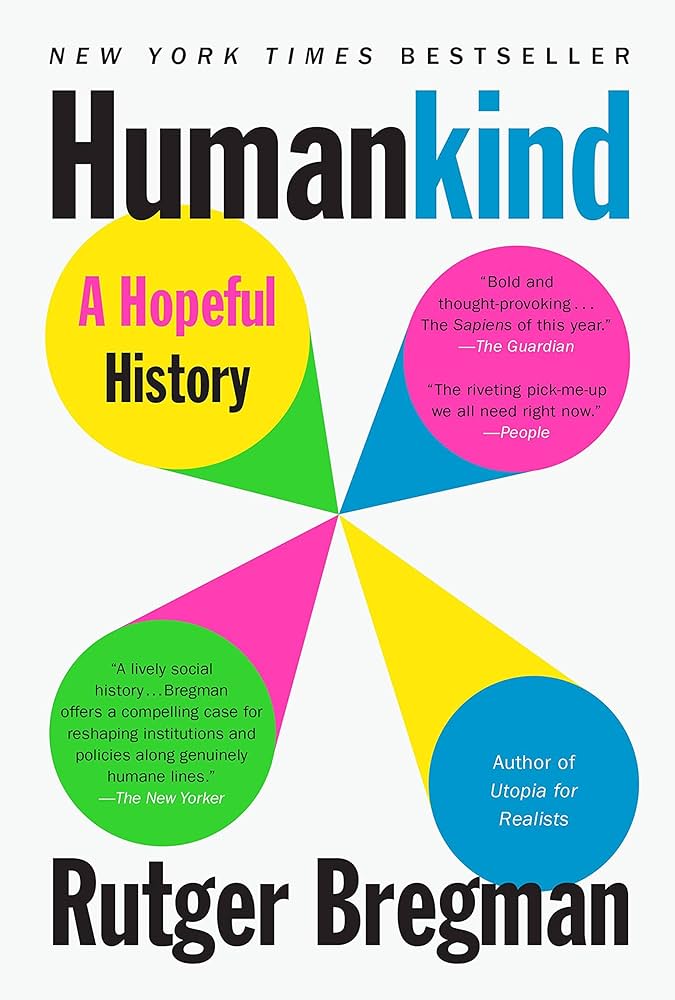
The fourth book I wish to highlight is Rutger Bregman’s Humankind. This is anthropology and sociology that aligns with evolutionary science of the sort that has flourished since Peter Kropotkin first wrote Mutual Aid. It aligns exceptionally well with what David Graeber (RIP, fuck, I miss that guy) and David Wengrow wrote in The Dawn of Everything. Over against the neo-Darwinians and the Hobbesian neoliberal vision of what it means ot be a human, Bregman offers an alternative (and, imo, truer) vision of who people are, how humanity got to where it is, and how it might yet get out of this mess. He overtimes many of the triusms we have been taught to take for granted about human greed, cruelty, and violence, debunks several studies that float around unquestioned in our social imaginary, and explores some alternatives that are already taking place here and now. It is very rare, indeed, that I read something that claims to be hopeful and feel any actual hope. However, I felt real hope after reading this book. What a gift that is for me and all of us.
The Worst of the Worst
Most of the books I read that left me feeling disappointed in myself for reading them, were in the domain of fiction. However, one book (well, two, I guess) stood out as especially bad—and especially, especially bad given the critical buzz that surrounded them. I’m talking about Volumes 1 and 2 of Solvej Balle’s On the Calculation of Volume—easily the most boring, endlessly repetitive, uninspiring, and vacuous text I’ve read in years. My theory is that this book was split into seven volumes for publication because nobody would ever bother reading this as a single volume. It’s not like this is a massively long text needing to be split into so many parts (like Knausgaard’s Struggle, for example—an example of an author who deals with the mundane, repetitive details of life in an entirely different and vastly superior manner). Both volumes 1 and 2 are less than 200pp each… but they’re so boring-as-fuck that I can see why they need to be taken apart and read separately. I have no intention of reading any subsequent volume. I’ll leave it to younger folks to grind through this kind of shit in order to feel literary. Ugh.
The Movies
Well, I watched almost two movies per week this year, which is kind of wild to me, but I’m pretty happy with a lot of what I watched. As per usual, this is a mixture of international film festival movies, horror films, and then the works of a few directors that I really enjoy following.
After several years, I find that I’m tiring of the horror genre, so I expect there to be less of that in 2026. Other than that, I’m pretty happy with this trajectory and feel that I have tons more to explore and discover.
The Best of the Best
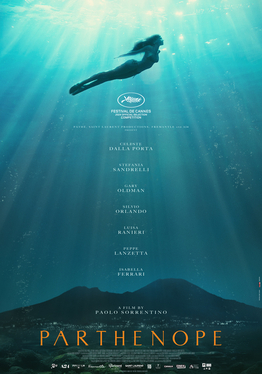
For my “best of the best” this year, I’m choosing a director—Paolo Sorrentino. Long considered one of the great directors of our day, I finally started watching him and, wow. Wow. Wow. Of the films I watched by him, Parthenope stood out the most but I kind of wonder if the Sorrentino film you end up liking the most (Parthenope? The Great Beauty? Youth?) is the first one you watch by him (since many of the themes overlap and various moves he makes in his films have parallel moves in earlier films). Despite enduring themes, each film feel like its own story, its own world, and its own experience (unlike, Malick, for example, who just ends up making film after film that feels derivative of himself). In Sorrentino’s work, we find themes of youth, beauty, ageing, mortality, ephemerality, sorrow, and wonder all woven together in a way that makes my heart feel that it will burst. These are films that I would like to watch over and over again with different people just to see how they are affected by them. I laughed. I cried. I gasped. I felt delighted for days afterwards.
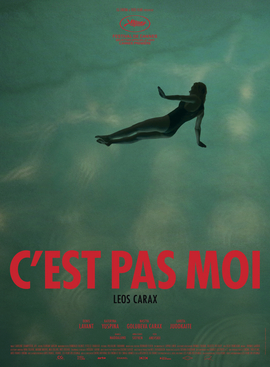
I watched a number of other movies I loved this year so it’s hard to pick-out a few others to highlight. However, Leos Carax’s It’s Not Me probably deserves to be mentioned next (side note: what the heck, both movie posters feature a conventionally-beautiful woman sillouetted in water! how curious!). I’m not usually a fan of this kind of self-referential, loosely-connected montage, retrospective short-film (it’s 42mins long and was prompted by a question Carax received from the Musée Pompidou: “Where do you stand, Leos Carax?”), but there was so much feeling and artistry in it that I was caught completely unawares. It was surprisingly fun and tender all at once. Two scenes, in particular (one involving a piano and a thunderstorm and another involving the use of David Bowie and puppets), left my jaw on the floor and I went back to them and played them over and over again.
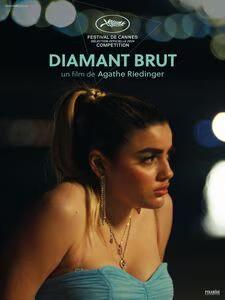
Other stand-out films include Anora by Sean Baker (I’ve loved everything Baker has done and though this felt a little bit more mainstream and light-hearted than some of his other films, I still really liked it). Given my proximity to sex work and also my close relationships with trans folx (and my love for both of those groups of people in general!), I also thought Levan Akin’s Crossing was phenomenal and deserved all the praise it received from critics. Same with Agathe Riedinger’s Wild Diamond which undercuts all the easy criticisms of the superficiality of social media, reality television, kids on screens, thirst traps, and so on.
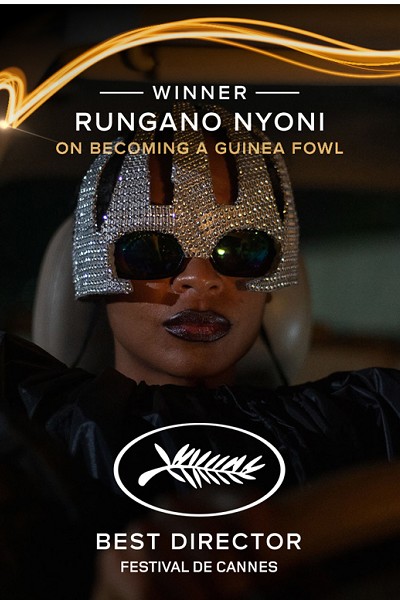
My ongoing foray into African cinema led me to Rungano Nyoni’s On Becoming a Guinea Fowl which I thought was a brilliant exploration of gendered dynamics and sexualized violence precisely because of what it doesn’t show or say (and which I appreciated more than Nyoni’s equally-acclaimed, I Am Not a Witch). Some truths are more powerfully presented when one approaches them, dances around them, almost gets to them from this or that angle, but never attempts to tidily sum them up.
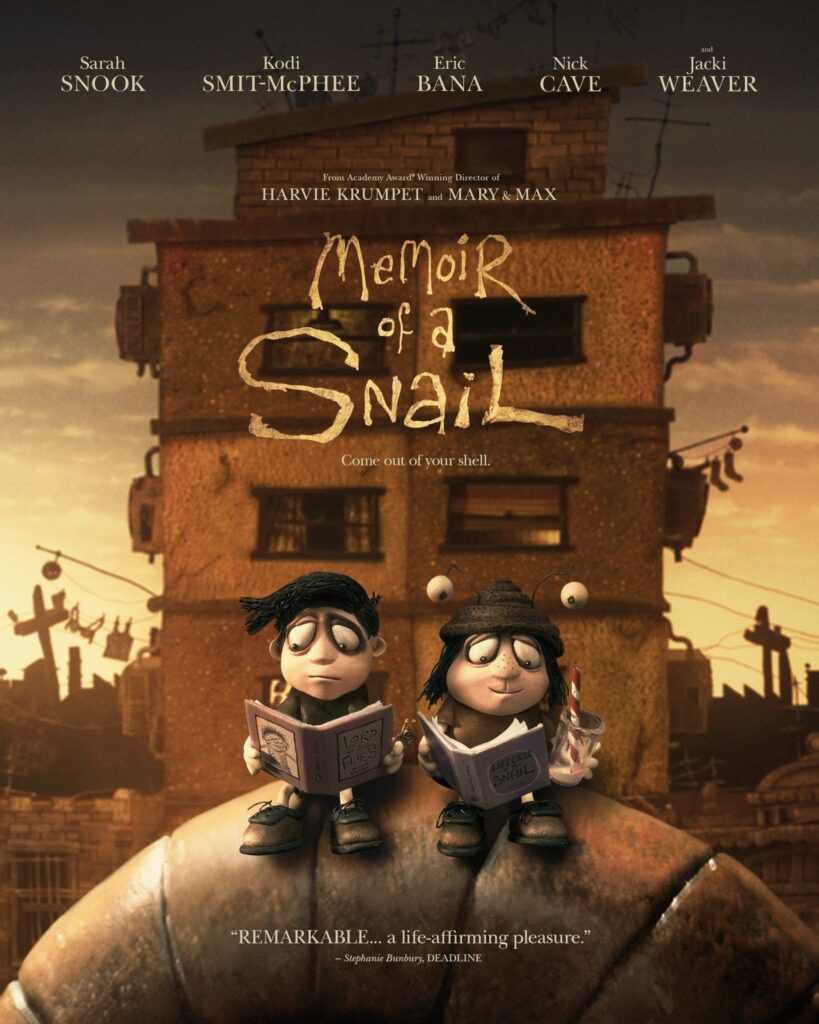
And sometimes, on a different note, some of the harder things in reality are best conveyed through stop-motion animation and a carefully-cultivated form of dark humour that never punches down, belittles or exploits—which is what I found in Adam Elliott’s Memoir of a Snail (both my son and I really like the craft that goes into stop-motion animation). On an equally humorous but altogether happier note, I laughed my way through Matthew Rankin’s Universal Language. Two kids’ movies were especially entertaining to me: Wolfwatchers by Tomm Moore (I love all his films) Ne Zha 2 by Yu Yang.
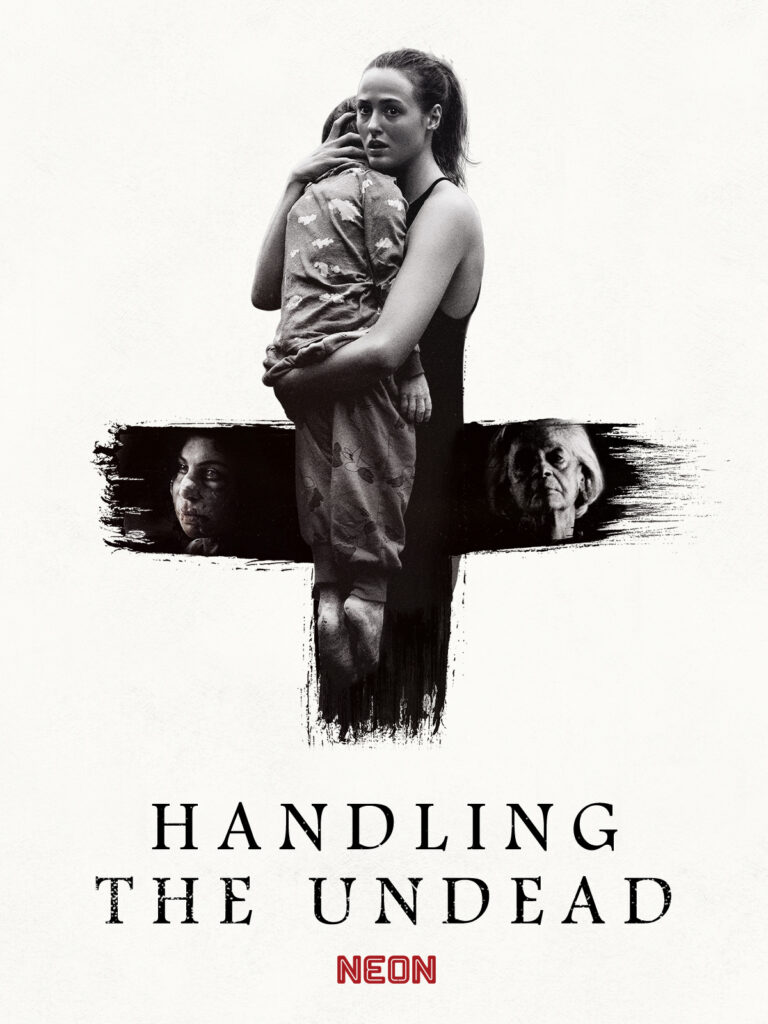
In the domain of horror, I thought Thea Hvistendahl’s Handling the Undead was a profound meditation on grief and loss and what happens to us when we refuse to let go of our dead (an important topic for me given how many of my loved ones are dead and dying). This is horror at its finest (and it also continues to demonstrate that, although John Ajvide Lindqvist isn’t the greatest writer, his books really do adapt exceptionally well to film [Let the Right One In being another of my favourites from the horror genre]). This film is cinematic, thoughtful, and affective. It is a reminder that very real horrors are a part of life and, also, that those horrors are but one part of life.

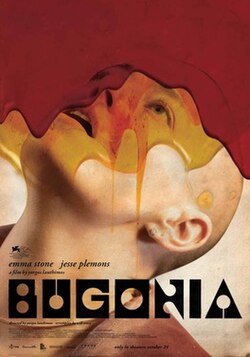
Both Robert Egger’s Nosferatu and Guillermo del Toro’s Frankenstein were a lot of fun, but were, perhaps, a little over-hyped. Luc Besson’s Dracula: A Love Tale got less press but was just as fun. I also thought Black Phone 2 was a great horror film that builds on classic themes, with plenty of Easter eggs for the devotees, while also doing something fun and new. I just didn’t like Scott Derricksen’s Christian shit (it’s interesting to note how, as the USA swings ever more to the fascist-right, Christian themes start appearing in more and more prominence, in a less and less critical and more openly approving light, in pop culture—from horror movies like this one to reality TV shows like Survivor). Lastly, I thought Bugonia was Yorgos Lanthimos’s best film since The Lobster. I don’t want to say much about it because spoilers, but I loved all the characters (the humanity! the humanity!) and the final sequence was so good that I watched it over and over and “wowed” every time.
The Worst of the Worst
I watched a few mainstream horror films this year that were truly godawful. Boring, zero investment in character, plots that don’t cohere or even come close to making sense, absolute shit acting, and not the slightest thing scary. The worst of them all was Leigh Wannell’s Wolf Man. This was an especially big bummer because: (1) it got a fair bit of hype (props to the marketing team!) and (2) there hasn’t been a solid effort at a werewolf movie in quite some time and I was looking forward to seeing what a contemporary interpretation might look like (since, of course, what we do with monsters always has something to say about us and our present historical moment). I also thought that Emilie Blitchfeldt’s body horror take on Cinderella, The Ugly Stepsister, relied far too much on a few grotesque scenes and lacked pretty much everywhere else. Christopher Landon’s Drop was probably the stupidest thing I’ve watched in a long time. Collet-Serra’s The Woman in the Yard was over-hyped and went nowhere, and the same applies to Stockholm Bloodbath by Mikael Håfström. Don’t even get me started on the studio garbage that was Michael Chaves’s The Conjuring: Last Rites (my prior comments about pop culture and Christianity also apply here—even though exorcism films have often featured Christian heroes this is more of a valorisation of an evangelical-type rather than a priest who may be just as comfortable as a character in a dungeon crawl as in an old cathedral).
Outside of the horror scene, Wes Anderson’s Phoenician Scheme was a major disappointment and made me wonder if Anderson has maintained his technical prowess but lost his heart. Moving to a different Anderson, the more I thought about P. T. Anderson’s One Battle After Another, the less I liked it. But Clint Bentley’s Train Dreams was truly bad. It felt like a White American man’s nostalgic fantasy about a past of Whiteness, Americanness, and maleness that never existed—precisely the kind of fantasy that undergirds all kinds of systemic violence, oppression, and disavowals of White, American, male responsibility and accountability today. Fucking barf.
The Documentaries
I watched one documentary a week in 2025. Two stand out as exceptionally good and are amongst the best I’ve watched any year. The first is Smoke Sauna Sisterhood by Anna Hints.
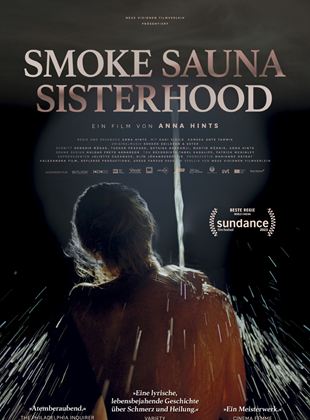
The smoke sauna culture that exists in Estonia is considered by UNESCO to be aa protected “Intangible Cultural Heritage.” However, regardless of the exceptional cinematography and settings, what really makes Hints’ documentary stand-out is the way in which she provides a glimpse into the relationships that take place between the women who gather at the lakeside smoke sauna in the woods. The intimacy, tenderness, humour, and openness (people are naked in the sauna but hearts, too, are bare… not necessarily in a “bleeding” way but in a, “here I am, this is me” way), left me feeling I had just witnessed something fully material and enfleshed and just as deeply spiritual and of the heart. The weaving of those themes seems to matter a great deal to me these days (as I mentioned above), and if you watch this film I reckon you’ll understand why.
As a personal aside, I found viewing this film to be revealing because I watched it around the same time that I went to a Scandinavian Spa with my then-partner. The Scandinave Spa is famous in Ontario and the grounds and facilities are lovely. However, it’s interesting to note that everyone is silenced there. People are supposed to maintain quiet in the saunas. Proper attire is required at all times (no nudity!). No loud-talking is permitted. No laughing either (at least not so loud that people across the pool from you might here). Instead there are directions on how to maximize the physical health outcomes of the spa by spending this many minutes in this sauna, then this many minutes in a cold plunge, and so on. What a different take on health than what is shown in Smoke Sauna Sisterhood! There the woman alternate between hot and cold (and also lightly whip each other with cedar and other herbs), but so much of what seems “therapeutic” about the sauna—and the culture that is now protected—has to do with the heart-work and heart-sharing that takes place in the interactions between the women in the sauna. It reminded me of how the Western model, in its effort to maximize efficiency based upon quantifiable and consistently measurable indicators and outcomes, often cuts the very heart out of our medicines and pathways to wellness (even if we still gain some obvious health outcomes via those routes). Sure, the Scandinave Spa left me feeling refreshed. But there was a lot that we will never get if that’s the only model we rely on for moving towards health (whatever we take that to be).
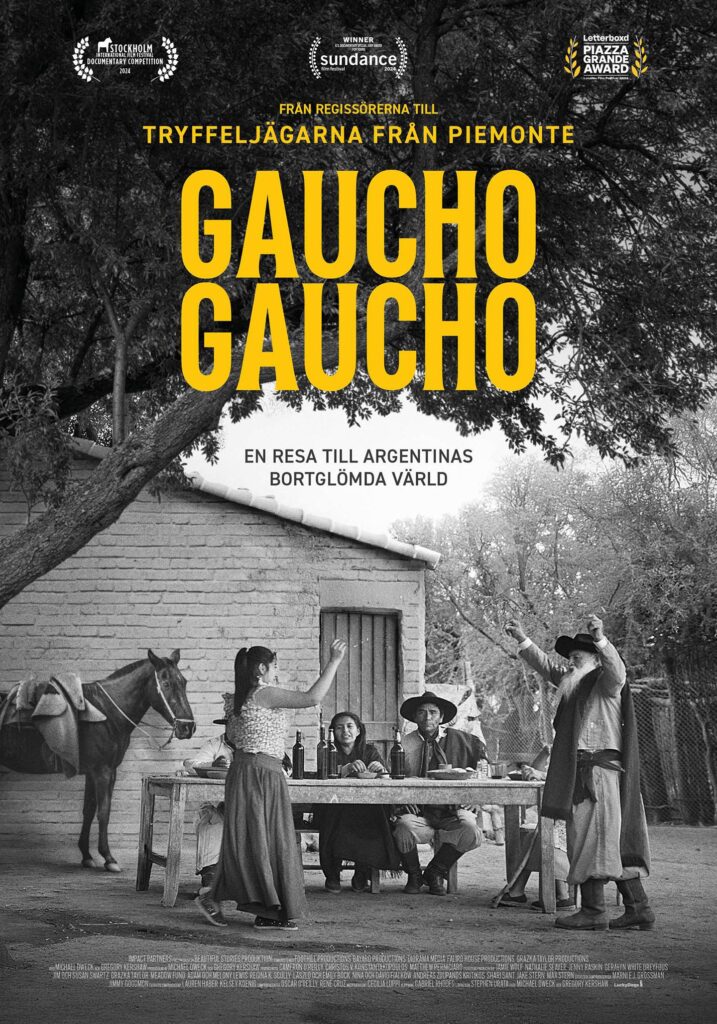
The second documentary that filled me with gratitude because I was able to bear witness to it, was Gaucho Gaucho by Gregory Kershaw and Michael Dweck. I’ve long been interested in films that provide glimpses into truly other worlds or cultures than the ones familiar to me. There are so many worlds that only exist in one place and nowhere else—but the spread of global capitalism (in both arterial and capillary forms) and the cultural imperialism that comes with it, is make those worlds increasingly rare. All the more reason to appreciate films that are able to document and show us these worlds before they are gone forever. Gaucho Gaucho is one such film—about the old gaucho culture that exists in Argentina, for at least a little while longer—and it’s an exceptionally good example of what films like this can be. Every shot is breath-taking. A horse sleeps on her side on the pampas and, one moment later, you realize there is a gaucho also sleeping on his side on the horse. Tenderness mixes with toughness. Indigeneity mixes with settler colonial elements. Old worlds collide with new ones. Some youth stay. Most go. Something is always dying. Something is always abiding. Something is always being born. It’s all so brief and all so beautiful. The living and the dying, too.
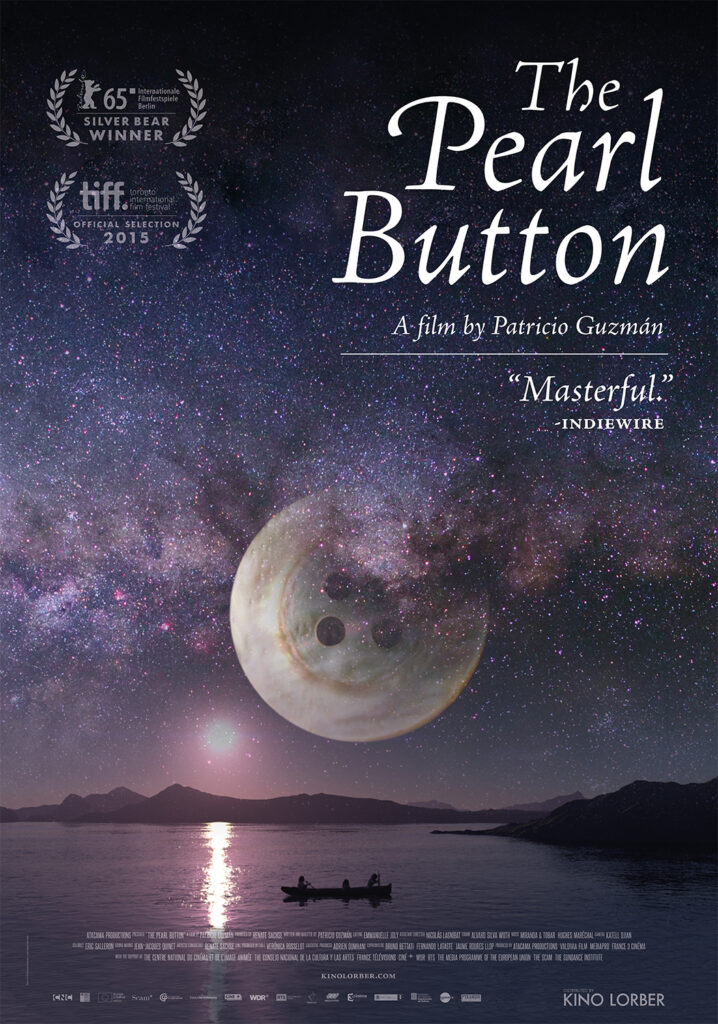
Several year ago, I watched Patricio Guzmán’s Nostalgia for the Light and it has stayed with me. It is actually one part of a quartet he made about Chile and so, in 2025, I watched the other three films—The Pearl Button, The Cordillera of Dreams, and My Imaginary Country. It’s an exceptional body of work and Guzmán is especially gifted as a weaver of seemingly disparate themes, environments, and subjects into a coherent and compelling narrative. From the star-knowledge of Indigenous peoples from the islands of Patagonia, to those who did and did not survive Pinochet, to star-gazers in the Atacama desert, to revolutionary students in the capital, Guzmán helps us to look, here, at this time and place (by the way, Margreth Olin’s outstanding Songs of Earth, does this, too, but in the context of an inter-generational farm on a Nordic fjord—also a film I watched in 2025 that I highly recommend).
The deeper you look into a single place, the more you get a sense for, well, everything. Because we are all inter- and intra-connected. The desert and the stars, the dictator and the mothers of the disappeared, the old ways and the cities, the ocean and the mountains, the camera lens and the world—we are all co-constituted by each other. Look close and then closer still. Soon you won’t know where one thing begins and another ends. Then, you may weep. But you will also say thank you.

Finally, because he is another of my favourite documentary film-makers, I have to mention Victor Kossakovsky’s Architecton, which came out last year. I love Kossakovsky’s work because it is technically beautiful—always superbly crafted—but it also has this way of plodding along, or making you think you are plodding along, but really you are being set up to have a mule kick you directly in your fucking heart. If you watched Gunda through to the end, you will know exactly what I mean—or, to pick another example, who can forget the scene in Aquarela of the Russian vehicle falling through the ice and rapidly sinking with its humans inside, while Kossakovsky’s drone continues its flight over Lake Baikal? Blink and you will miss it!
Architecton is yet another masterpiece. Watch enough films by Kossakovsky and others like him, and you will learn to see the entire world differently. You will find yourself bored by what Hollywood offers you but absolutely captivated by a puddle in the road, the clouds reflected from a building, or the lines etched into your neighbour’s hands. Just as many of the philosophers I love most are (to me) most loved because they help me to think more creatively and playfully and otherwise, so also some of the filmmakers I most love are those who teach me to see more wondrously, curiously, and tenderly. If that sounds good to you, then watch some of these films.
The Worst of the Worst
So, I’m pretty happy with a lot of the documentaries I watched in 2025, and I haven’t even mentioned several others that were outstanding. But this post is too long already. I didn’t watch any super godawful documentaries, although I did watch several that were pulpy, lacking in substance and mostly mindless (for example, most of the disaster- or true crime-type documentaries I watched on Netflix—Netflix has been pretty shit for documentaries these days). However, the one documentary that I watched in 2025 that stood out as significantly worse than the rest was Life with Ghosts by Stephen Berkley. Pretty much everything about the movie sucked, but it clearly had some solid backing from the right investors (otherwise how could this infomercial for an alternative therapeutic model end up winning some film fest awards?). I personally found this to be a major bummer, in part, because I know so many people who have died (close to 500 over the last six years?) and I’ve been spending a lot of time thinking about what it means to be good company with both the living and the dead. This documentary wasn’t any help with that. Quimbanda has helped, though. So I’ll just focus more on that. Onwards, then, to 2026.
Here is the complete list for 2025. The best are marked with [++]. Other stand-outs with a [+]. Those that I found especially meh or just plain bad have an [-]. Thanks for reading! I would happily hear your “bests” and “worsts” of 2025.
BOOKS (165)
Auto/biography & Memoirs (7)
- Crosley, Sloane. Grief Is For People (2024).+
- Herzog, Werner. Every Man for Himself and God Against All (2022).
- Mullins, Garth. Crackdown: Surviving and Resisting the War on Drugs (2025).
- Newton, Huey P. Revolutionary Suicide (1973).+
- Polley, Sarah. Run Towards the Danger: Confrontations with a Body of Memory (2022).
- Seacole, Mary. Wonderful Adventures of Mrs. Seacole in Many Lands (1858).
- Sinclair, Safiya. How to Say Babylon (2023).
Economics (1)
- McNally, David. Monsters of the Market: Zombies, Vampires and Global Capitalism (2011).+
Fiction and Literature (40)
- Allen, Samantha. Patricia Wants to Cuddle (2022).
- Armfield, Julia. Our Wives Under the Sea (2022).
- Balle, Solvej. On the Calculation of Volume (Vols. 1 & 2 [2020/2024]).-
- Barakat, Najwa. Mister N (2022 [2019]).
- Biss, Eula. On Immunity: An Inoculation (2014).+
- Bukowski, Charles. Post Office (1971).
- Castellanos Moya, Horacio. Senselessness (2008 [2004]).
- Chopin, Kate. The Awakening (1899).
- Cisneros, Sandra. Women Hollering Creek and Other Stories (1991).+
- Cusk, Rachel. The Bradshaw Variations (2009).
- De Marcken, Anne. It Lasts Forever and Then It’s Over (2024).+
- Didion, Joan. Slouching Towards Bethlehem: Essays (1968).
- Dillard, Annie. For the Time Being (1999).
- ________. Pilgrim at Tinker Creek (1972).++
- Diop, David. At Night All Blood Is Black (2018).
- Drndić, Daša. Doppelgänger (2018 [2002]).
- Gaafar, Reem. A Mouth Full of Salt (2025).
- Garza, Christina Rivera. Death Takes Me (2025 [2008]).
- Gavalda, Anna. Billie (2013).
- Halliday, Lisa. Asymmetry (2017).
- Harpman, Jacqueline. I Who Have Never Known Men (1995).
- Hedva, Johanna. Your Love Is Not Good (2023).-
- Hustvedt, Siri. Mothers, Fathers, and Others: Essays (2021).
- Hwang, Sun-Mi. The Hen Who Dreamed She Could Fly (2013 [2000]).-
- Jefferson, Margo. Constructing a Nervous System: A Memoir (2022).
- Leyton, Katherine. Motherlike (2024).
- Lockwood, Patricia. Will There Ever Be Another You (2025).
- ________. No One Is Talking About This (2021).++
- Malek, Alia (ed.). Aftershocks: Contemporary Syrian Prose (2024).
- Naga, Noor. If An Egyptian Cannot Speak English (2022).
- Oyamada, Hiroko. The Factory (2019 [2013]).
- Reva, Maria. Good Citizens Need Not Fear (2020).+
- Sánchez, Erika L. I Am Not Your Perfect Mexican Daughter (2017).
- Solà, Irene. I Gave You Eyes and You Looked Toward Darkness (2025).+
- ________. When I sing, mountains dance (2022 [2019]).++
- Toews, Miriam. A Truce That Is Not a Peace (2025).+
- Tulathimutte, Tony. Rejection (2024).
- Wolff, Lina. Many People Die Like You (2020).+
- Zevin, Gabrielle. Tommorow, and Tomorrow, and Tomorrow (2022).-
Graphic Novels (15)
- Abouet, Marguerite and Clément Oubrerie. Aya: Life in Yop City (2012).
- Ang, Rachel. I Ate the Whole World to Find You (2025).
- Archembault, Brigitte. The Shiatsung Project (2021).
- Giponte, Andrea Grosso. Freiheit! The White Rose Graphic Novel (2021).
- Lemire, Jeff and Phil Hester. Family Tree (3 vols; 2019-2021).
- Louis, Rick, art by Lara Antal. Ronan and the Endless Sea of Stars (2022).
- Machado, Carmen Maria (writer), Dani (artist). The Low, Low Woods (2019-2020).
- Mejias, John Vasquez. The Puerto Rican War: A Graphic History (2024).+
- Oseman, Alice. Heartstopper: Volumes 1-4 (2020-2021).
- Vehlmann Fabien and Pommepuy, Marie. Beautiful Darkness (2017 [2009]).
Indigenous Theory & Lit (10)
- DeMallie, Raymond J. (ed.). The Sixth Grandfather: Black Elk’s Teachings Given to John G. Neihardt (1984).
- Dimaline, Cherie. The Marrow Thieves (2017).
- Elliott, Alicia. And Then She Fell (2023).-
- Ellis, Jean A. This Is the Dreaming: Australian Aboriginal Legends (1994).
- Halfe, Louise B.—Sky Dancer. Bear Bones & Feathers (2022).+
- Kimmerer, Robin Wall. The Serviceberry: Abundance and Reciprocity in the Natural World (2024).+
- okpik, dg nanouk. blood snow (2022).
- Rytkheu, Yuri. When the Whales Leave (2009 [1975]).
- Simpson, Leanne Betasamosake. Theory of Water: Nishnaabe Maps to the Times Ahead (2025).+
- Vermette, Katherena. River Woman (2018).
Media and Technology (2)
- Odell, Jenny. How to Do Nothing: Resisting the Attention Economy (2019).
- Paasonen, Susanna. Dependent, Distracted, Bored: Affective Formations in Networked Media (2021).
NPIC (6)
- Biehl, João with photographs by Torben Eskerod. Vita: Life in a Zone of Social Abandonment (2013 [2005]).+
- Fortier, Craig, Edward Hon-Sing Wong, and MJ Rwigema (eds.). Abolish Social Work (As We Know It) (2024).+
- Hari, Johann. Chasing the Scream: The First and Last Days of the War on Drugs (2017).++
- Nadasen, Premilla. Care: The Highest Stage of Capitalism (2023).+
- Oudshoorn, Daniel. A Frontline Worker’s Manifesto: Lessons Learned in Good Company (2025).+
- Raffo, Susan. Liberated to the Bone: Histories, Bodies, Futures (2022).-
- Alexander, M. Jaqui. Pedagogies of Crossing: Meditations on Feminism, Sexual Politics, Memory and the Sacred (2005).
- Badiou, Alain. The Century (2005).
- Batchelor, Stephen. The Art of Solitude: A Meditation on Being Alone with Others in this World (2020).+
- Eddington, William. The Rigor of Angels: Borges, Heisenberg, Kant and the Ultimate Nature of Reality (2023).
- Eilenberger, Wolfram. Time of the Magicians: Wittgenstein, Benjamin, Cassirer, Heidegger, and the Decade that Reinvented Philosophy (2021 [2018]).
- Lingis, Alphonso. The Community of Those Who Have Nothing in Common (1994).
- Morton, Timothy. Humankind: Solidarity with Nonhuman People (2017).-
Poetry (34)
- Abi-Karam, Andrea. Villainy (2021).
- Allen, Kendra. The Collection Plate: Poems (2021).
- Cariño, Ina. Feast (2023).
- Codjoe, Ama. Bluest Nude: Poems (2022).
- Fox, Megan. Pretty Boys Are Poisonous: Poems (2023).
- Galaicu-Păun, Emilian. Canting Arms: Poems (2024).-
- Handke, Peter. Nonsense and Happiness (1976).
- H.D., Eva. The Natural Hustle (2023).+
- Hollett, Matthew. Optic Nerve: Poems (2023).
- Jones, Saeed. Alive at the End of the World (2022).+
- Kokumo. Reacquainted With Life (2016).
- Koss, Zane. Country Music (2025).++
- Levertov, Denise. This Great Unknowing: Last Poems (2000).
- Lönnrot, Elias. The Kalevala (1849).
- MacAskill, Annick. Shadow Blight (2022).
- Masters, Edgar Lee. Spoon River Anthology (1915).
- Murray, Christopher Brean. Black Observatory: Poems (2023).+
- Nguyen, Hieu Minh. Not Here: Poems (2018).+
- Oliver, Mary. Felicity (2015).+
- ________. Blue Horses: Poems (2014).
- ________. West Wind: Poems and Prose Poems (1997).
- ________. A Poetry Handbook: A Prose Guide to Understanding and Writing Poetry (1994).
- ________. New and Selected Poems (1992).+
- Parker, Morgan. There Are More Beautiful Things Than Beyoncé (2017).
- Ponsot, Marie. The Bird Catcher: Poems (1998).-
- Shipley, Ely. Some Animal (2018).
- Smith, Tracy K. Wade in the Water: Poems (2018).+
- ________. Life on Mars: Poems (2011).+
- Vang, Mai Der. Afterland: Poems (2017).
- Verlaine, Paul. Women Men (1979).
- Walcott, Derek. Selected Poems (2007).
- West, Sasha. Failure and I Bury the Body: Poems (2013).
- Williams, Frederick G. (ed.). Poets of Brazil: A Bilingual Selection (2004).
- Williams, William Carlos. Selected Poems (ed. By Charles Tomlinson [1985]).
Politics & Social Theory (5)
- Hammad, Isabella. Recognizing the Stranger: On Palestine and Narrative (2024).+
- Neocleous, Mark. A Critical Theory of Police Power (2021 [2000]).+
- Povinelli, Elizabeth A. Routes/Worlds (2022).
- Seigel, Micol. Violence Work: State Power and the Limits of Police (2018).
- Sontag, Susan. Regarding the Pain of Others (2003).
Psy-Disciplines & Self-Help (12)
- Bollas, Christopher. Cracking Up: The Work of Unconscious Experience (1995).
- Brazier, David. Love and Its Disappointments: The Meaning of Life, Therapy and Art (2009).++
- Campbell, Sherrie. Adult Survivors of Emotionally Abusive Parents: How to Heal, Cultivate Emotional Resilience & Build the Life & Love You Deserve (2024).+
- Cvetkovich, Ann. Depression: A Public Feeling (2012).+
- Dombek, Kristen. The Selfishness of Others: An Essay on the Fear of Narcissism (2016).+
- Hollis, James. Swamplands of the Soul: New Life in Dismal Places (1996).+
- Kreisman, Jerold J. and Hal Straus. I Hate You—Don’t Leave Me: Understanding the Borderline Personality (3rd ed.) (2021).
- Phillips, Adam. On Giving Up (2024).
- ________. Side Effects (2006).
- Salcel, Renata. On Anxiety (2004).
- Schwartz, Richard C. You Are the One You’ve Been Waiting For: Applying Internal Family Systems to Intimate Partner Relationships (2023).
- Spade, Dean. Love in a F*cked-Up World: How to Build Relationships, Hook Up, and Raise Hell Together (2025).+
Science & Nature (10)
- Bregman, Rutger. Humankind: A Hopeful History (2019).+
- Brown, Nancy Marie. Looking for the Hidden Folk: How Iceland’s Elves Can Save the Earth (2022).
- Brusatte, Steve. The Rise and Reign of Mammals: A New History From the Shadow of the Dinosaurs to Us (2022).++
- Clapp, Alexander. Waste Wars: The Wild Afterlife of Your Trash (2025).+
- Cruikshank, Julie. Do Glaciers Listen? Local Knowledge, Colonial Encounters, & Social Imagination (2005).
- Egan, Dan. The Death and Life of the Great Lakes (2017).
- Giono, Jean. The Man Who Planted Trees (1995).
- Gros, Frédéric. A Philosophy of Walking (2023 [2011]).
- Haupt, Lyanda Lynn. Rooted: Life at the Crossroads of Science, Nature, and Spirit (2021).+
- MacFarlane, Robert. Is a River Alive? (2025).+
Sex & Gender (6)
- Harmange, Pauline. I Hate Men (2020).
- Lewis, Sophie. Enemy Feminisms: TERFS, Policewomen & Girlbosses Against Liberation (2025).+
- Manne, Kate. Unshrinking: How to Face Fatphobia (2024).
- Orchard, Treena. Sticky, Sexy, Sad: Swipe Culture and the Darker Side of Dating Apps (2024).-
- Ratajkowski, Emily. My Body (2021).
- Snyder, Rachel Louise. No Visible Bruises: What We Don’t Know About Domestic Violence Can Kill Us (2019).
Subaltern Spiritualities (9)
- Critchley, Simon. Mysticism (2024).+
- Frisvold, Nicholaj de Mattos. The Cunning Craft: A Tortuous Path of the Wise Art (2025).
- ________. Seven Crossroads of Night: Quimbanda in Theory and Practice (2023).++
- Hurbon, Laënnec. Voodoo: Search for the Spirit (1993).
- Karlsdóttir, Alice. Norse Goddess Magic: Trancework, Mythology, and Ritual (2015 [2003]).
- Matyszak, Philip. Ancient Magic: A Practitioner’s Guide to the Supernatural in Greece and Rome (2019).+
- Omotobàtálá, Bàbá Osvaldo. The Kingdom of Kimbanda (1999).
- Simmons, Marc. Witchcraft in the Southwest: Spanish and Indian Supernaturalism on the Rio Grande (1974).
- Teixeira, Jennifer. Temple of the Bones: Rituals to the Goddess Hekate (2021).
Theology (Christian) (2)
- Driedger, David C. L. Nothing Will Save Us: A Theology of Immeasurable Life (2025).
- Ringma, Charles R. In the Shadow of a Rugged Cross: Reflections on the Spirituality of Dietrich Bonhoeffer (2025).
MOVIES (99)
- Aïnouz, Karim. Motel Destino (2024).
- Akin, Levan. Crossing (2024).+
- Allen, Josiah and Indiana Bell. You’ll Never Find Me (2024).
- Anderson, P. T. One Battle After Another (2025).
- Anderson, Wes. The Phoenician Scheme (2025).
- Angelini, Cinzia and David Feiss. Hitpig! (2024).
- Baker, Sean. Anora (2024).+
- Bareiša, Laurynas. Drowning Dry (2024).+
- Bentley, Clint. Train Dreams (2025).-
- Besson, Luc. Dracula: A Love Tale (2025).+
- Blitchfeldt, Emilie. The Ugly Stepsister (2025).-
- Boyle, Danny. 28 Years Later (2025).
- Bronstein, Mary. If I Had Legs I’d Kick You (2025).+
- Byrne, Sean. Dangerous Animals (2025).
- Carax, Leos. It’s Not Me (2024).++
- Cave, Mimi. Holland (2025).
- Cervera, Michelle Garza. The Hand That Rocks the Cradle (2025).
- Chaves, Michael. The Conjuring: Last Rites (2025).-
- Chu, Jon M. Wicked (2024).
- Coen, Joel & Ethan. No Country for Old Men (2007).
- Collet-Serra, Jaume. The Woman in the Yard (2025).-
- Coppola, Gia. The Last Showgirl (2024).
- Craig, Eli. Clown in a Cornfield (2025).
- Cregger, Zach. Weapons (2025).
- Cronenberg, Caitlin. Humane (2024).
- Crouse, Karrie and Will Joines. Hold Your Breath (2024).
- Delpero, Maura. Vermiglio (2024).
- del Toro, Guillermo. Frankenstein (2025).
- ________. Nightmare Alley (2021).
- Derrickson, Scott. Black Phone 2 (2025).+
- Dickinson, Harris. Urchin (2024).
- Eggers, Robert W. Nosferatu (2024).
- Eisenberg, Jesse. A Real Pain (2024).
- Elliott, Adam. Memoir of a Snail (2024).+
- Fellin, Guetty. Ayiti Mon Amour (2016).-
- Fingscheidt, Nora. The Outrun (2024).+
- Flying Lotus. Ash (2025).
- Foumbi, Ellie. Our Father the Devil (2021).+
- Franz, Veronica and Severin Fiala. The Devil’s Bath (2024).
- Frias, Fernando. I’m No Longer Here (2019).+
- Green, Mark Anthony. Opus (2025).
- Guerra, Ciro. Embrace of the Serpent (2016).
- Guiraudie, Alain. Misericordia (2024).
- Haberle, Felipe Gárcia. The Settlers (2023).-
- Hadžihalilović, Lucile. The Ice Tower (2025).
- Håfström, Mikael. Stockholm Bloodbath (2023).
- Hamaguchi, Ryûsuke. Evil Does Not Exist (2023).
- Heller, Marielle. Nightbitch (2025).+
- Herbulot, Jean Luc. Saloum (2021).+
- Herzog, Werner. Aguirre, the Wrath of God (1972).
- Ho, Bong Joon. Mickey 17 (2025).+
- Howard, Ron. Eden (2024).
- Hu, Guan. Black Dog (2024).+
- Hvistendahl, Thea. Handling the Undead (2024).+
- Jang Jae-Hyun. Exhuma (2024).
- Jude, Radu. Do Not Expect Too Much from the End of the World (2023).
- ________. Bad Luck Banging or Looney Porn (2021).
- Kusama, Karyn. Jennifer’s Body (2009).
- Landon, Christopher. Drop (2025).-
- Lanthimos, Yorgos. Bugonia (2025).+
- ________. Kinds of Kindness (2024).
- Lipovsky, Zach and Adam Stein. Final Destination Bloodlines (2025).
- Loach, Ken. Jimmy’s Hall (2014).+
- Malick, Terrence. A Hidden Life (2019).
- Menzel, Jiří. Closely Watched Trains (1966).+
- Moore, Tomm. Wolfwalkers (2020).+
- ________. Song of the Sea (2014).+
- Morgan, Mercedes Bryce. Bone Lake (2025).
- Nyoni, Rungano. On Becoming a Guinea Fowl (2024).+
- Pallson, Thordur. The Damned (2024).
- Panahi, Jafar. It Was Just an Accident (2025).
- Park Chan-Wook. No Other Choice (2025).
- Park, Nick and Merlin Crossingham. Wallace and Gromit: Vengeance Most Fowl (2024).
- Perkins, Oz. The Monkey (2025).
- Philippou, Danny and Michael. Bring Her Back (2025).
- Poser, Toby, Zelda Adams and John Adams. The Deeper You Dig (2019).-
- Potrykus, Joey. Vulcanizadora (2025).+
- Rankin, Matthew. Universal Language (2024).+
- Rice, John and Albert Calleros. Beavis and Butthead Do the Universe (2022).
- Riedinger, Agathe. Wild Diamond (2024).+
- Robinson, Jennifer Kaytin. I Know What You Did Last Summer (2025).-
- Rohrwacher, Alice. La Chimera (2023).
- ________. Happy as Lazzaro (2018).+
- Romero, Tina. Queens of the Dead (2025).
- Russell, Alex. Lurker (2025).
- Santambrogio, Tommaso. Oceans are the Real Continents (2023).+
- Sen, Ivan. Limbo (2023).+
- Soderbergh, Steven. Presence (2024).
- Sorrentino, Paolo. Parthenope (2024).++
- ________. The Hand of God (2021).+
- ________. Youth (2015).+
- ________. The Great Beauty (2013).+
- Talati, Shuchi. Girls Will Be Girls (2024).
- Tarr, Béla. Damnation (1988).
- Von Horn, Magnus. The Girl with the Needle (2024).
- Walker, Molly Manning. How to Have Sex (2023).
- Whannell, Leigh. Wolf Man (2025).—
- Wolfhard, Finn and Billy Bryk. Hell of a Summer (2023).
- Yang, Yu. Ne Zha 2 (2025).+
DOCUMENTARIES (52)
- Adra, Basel, Rachel Szor, Hamdan Ballal and Yuval Abraham. No Other Land (2025).+
- Beaudet, Nadine. Manicouagan (2024).+
- Berkley, Stephen. Life With Ghosts (2024).-
- Borgman, Skye. Unknown Number: The High School Catfish (2025).
- Bonnetta, Joshua and J.P. Sniadecki. El Mar La Mar (2017).
- Brown, Margaret. The Yogurt Shop Murders (2025).
- Brown, Shianne. Trainwreck: Mayor of Mayhem (2025).
- Burgin, Xavier. Horror Noire: a history of Black horror (2019).
- Collier, Noah and Emily Mackenzie. Carpet Cowboys (2023).+
- Coogler, Ryan. Sinners (2025).
- Curry, Arwen. Worlds of Ursula K. Le Guin (2018).
- Daughtrey, Ben and Charlie Siskel. The Sexiest Man in Winnipeg (2025).
- Drygas, Vita Maria. Danger Zone (2023).
- Earp, Jeremy. Behind the Shield: The Power & Politics of the NFL (2022).
- El Moudir, Asmae. The Mother of All Lies (2023).
- Gandbhir, Geeta. The Perfect Neighbor (2025).
- Gandhbir, Geeta, Samantha Knowles, and Spike Lee. Katrina: Come Hell and High Water (2025).
- Guendelman, Yotam and Ari Pines. The Tylenol Murders (2025).
- Guzmán, Patricio. My Imaginary Country (2022).
- ________. The Cordillera of Dreams (2019).++
- ________. The Pearl Button (2015).++
- Haskin, Thomas Lindsey. The Fish Thief: A Great Lakes Mystery (2024).-
- Herzog, Werner and Clive Oppenheimer. Fireball: Visitors From Darker Worlds (2020).+
- Hints, Anna. Smoke Sauna Sisterhood (2023).++
- Hubbard, Tasha. Singing Back the Buffalo (2024).
- Ito, Shiori. Black Box Diaries (2024).+
- Jarecki, Andrew and Charlotte Kaufman. The Alabama Solution (2025).+
- Kershaw, Gregory and Michael Dweck. Gaucho Gaucho (2024).++
- Koroma, Salima. Dreamland: The Burning of Black Wall Street (2021).
- Kossakovsky, Victor. Architecton (2024).++
- Lacey, Alexandra. The Twister: Caught in the Storm (2025).
- Lawless, Lucy. Never Look Away (2024).
- Lom, Petr. I Am the River, the River Is Me (2024).
- McMillion Sheldon, Elaine. King Coal (2023).+
- Monroe, Mark. Titan: The Oceangate Disaster (2025).
- Morris, Errol. Separated (2024).+
- Olin. Margreth. Songs of Earth (2023).++
- Olshefski, Jonathan and Elizabeth Day. Without Arrows (2025).
- Oppenheim, Lance. Some Kind of Heaven (2020).
- Peck, Raoul. Orwell: 2 + 2 = 5 (2025).
- Poitras, Laura. All the Beauty and the Bloodshed (2022).+
- Randall, Chelsea. Belle Gibson: The Search for Instagram’s Worst Con Artist (2023).
- Shannon, Lyttanya. Sweet Bobby: My Catfish Nightmare (2024).
- Sewell, Luke. Jerry Springer: Fights, Cameras, Action (2025).
- Smith, D. Kokomo City (2023).+
- Snyder, Kim A. The Librarians (2025).+
- Theroux, Louis. The Settlers (2024).
- Victor-Pujebet, Bruno. The Magical World of Moss (2023).
- Wechsler, Judith. Svetlana Boym: Exile and Imagination (2017).
- Winter, Alex. The Panama Papers (2018).
- Wolf, Matt. Pee Wee as Himself (2025).+
- Zhang-Ke, Jia. Caught by the Tides (2024).